



Omiyage: Japan's Fall Tradition of Thoughtful Gift-Giving

Omiyage is Japan's tradition of bringing back gifts, usually food, for the people you did not travel with: coworkers, family, friends, anyone who stayed behind while you were away. Unlike a Western souvenir, which is typically a personal memento kept for yourself, omiyage is meant to be shared, and the custom traces back to religious pilgrimages, when travelers brought home charms or talismans from shrines as proof of their journey. September, when students return to school and coworkers reunite after summer travel, is one of the biggest omiyage seasons of the year in Japan, second only to the winter holidays. Here is what the tradition actually means, how it evolved from religious keepsakes into snack boxes, and how to bring a version of it into your own gift-giving, wherever you happen to be.
What Is Omiyage? Understanding Japan's Gift-Giving Tradition
Omiyage began as a spiritual practice: pilgrims visiting shrines would bring back charms or talismans as tangible proof of their journey, often to share with those who could not make the trip themselves. Over centuries, the custom broadened from religious keepsakes into today's practice of bringing back food, most often traditional Japanese snacks or regional specialties, for coworkers, friends, and family after any trip, whether a pilgrimage, a vacation, or a routine business trip. The word itself combines "miyage," meaning souvenir, with the honorific "o" prefix, a small linguistic detail that signals just how much social weight the custom carries in everyday Japanese life. In Japanese culture, omiyage means "local specialty," and the kanji for omiyage combines the characters for "local" and "product." The term omiyage evolved from "miyage" meaning "local product."
The Meaning Behind the Gift: Why Omiyage Matters
In Japanese culture, giving a gift is rarely just about the item itself. An omiyage, whether a box of sweets or a regional specialty, communicates something closer to "I thought of you" than "I bought you a thing." The custom is rooted in giri, a sense of duty and reciprocity that runs through much of Japanese social life, so giving omiyage functions less like a transaction and more like a small act of relationship maintenance: a way of bridging the distance created by travel and reminding someone they were on your mind while you were away. It is a subtle form of communication, one that says something about the relationship without requiring either person to say it out loud.
September: A Season of Returns and New Beginnings
As summer ends, students head back to school, families return from vacations, and coworkers reunite after time off, and September becomes a natural moment for reconnecting and showing appreciation across Japan. Seasonal treats and traditional sweets that reflect the shift into autumn are common picks during this window, whether the occasion is thanking colleagues who covered shifts over the summer or simply sharing the joy of a recent trip with people back home. In a culture that values harmony, these small gestures carry outsized meaning, marking transitions and reinforcing relationships as the year moves into its final stretch. It is a rhythm that repeats every year: a burst of travel and movement over the summer, followed by a quiet, gift-giving reset once everyone is back in place.
From Station Kiosks to Department Stores: Types of Omiyage
Omiyage spans a wide range of price points and formality. At the simpler end, travelers pick up snacks at train station kiosks, convenience stores, and local grocery shops, Japanese Kit Kats in region-specific flavors like matcha, sake, or local fruit are a classic example, perfect as a quick, low-stakes token of appreciation. At the more formal end, department stores and specialty shops in major cities sell elegant wagashi, savory rice crackers, and artisanal teas tied to the character of a specific region, gifts meant to convey a bit more care and occasion than a station kiosk snack. What connects both ends of the spectrum is regional specificity: a good omiyage almost always says something about where it came from, whether that is a specific prefecture, a famous train station, or a single well-known confectioner.
Japanese Snacks That Tell a Story
Souvenir snacks in Japan tend to do more work than a generic gift shop item: they often highlight local ingredients, reference cultural symbols, or shift with the season, cherry blossom-scented sweets in spring, chestnut and sweet potato flavors in autumn, so that a single snack can carry a sense of place and time inside it. That storytelling quality is part of why food-based gifts remain the default choice for omiyage over trinkets or souvenirs with no real connection to where they came from. A keychain says "I was somewhere." A regional sweet, tied to a specific prefecture's ingredients or a specific maker's recipe, says something closer to "I was somewhere, and I thought about what you might actually enjoy."
Omiyage Gift Etiquette: What to Know Before You Give
Individually Wrapped Items
-
Choose items that are individually wrapped, since they are easy to distribute among a group without anyone having to portion things out, and it keeps things sanitary when a box gets passed around an office.
Quantity and Timing
-
Bring enough for everyone in the group so no one is visibly left out, since an uneven distribution can create real discomfort in a culture that values group harmony.
-
Give omiyage soon after returning from a trip, since delaying can read as an afterthought rather than a genuine gesture.
Packaging Presentation
-
Packaging should be neat and presentable, but does not need to be extravagant; a simple, well-kept package communicates the same respect as an elaborate one, and overdoing it can occasionally read as showing off rather than as generosity.
Bring the Spirit of Omiyage Home with Bokksu
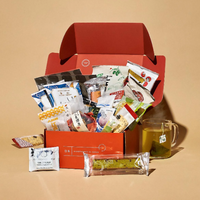
You do not need to be returning from a trip to practice a version of omiyage, and a Bokksu Snack Box captures a lot of the same spirit: a curated selection of Japanese snacks, sourced directly from small makers, meant to be shared rather than kept to yourself. The autumn rotation leans into the same seasonal flavors that define omiyage season in Japan, matcha, chestnut, sweet potato, and black sesame, with items like the Matcha Chocolate Stick Cake, made with Uji, Kyoto matcha, and One Bite Sesame Mochi, which pairs chewy mochi with anko and a sesame coating, both of which would not look out of place in a department store omiyage display.
For anyone abroad who wants to send a piece of Japan to someone back home, or simply share the flavors of a trip they cannot physically bring back, a subscription solves the same problem omiyage was always meant to solve: closing the distance with something thoughtful, without needing a passport or a suitcase to do it. It also solves the etiquette problem raised earlier, since a curated box already arrives individually wrapped and portioned, taking the guesswork out of how much to bring and how to divide it.

Frequently Asked Questions
What is omiyage?
Omiyage is the Japanese tradition of bringing back gifts, usually food like regional snacks or sweets, for coworkers, friends, and family after a trip. Unlike a personal souvenir, it is meant to be shared with people who did not travel.
Why do Japanese people give omiyage?
Omiyage is rooted in giri, a cultural sense of duty and reciprocity, and functions as a way to show appreciation, maintain relationships, and acknowledge that someone was thought of while the giver was away.
What is proper omiyage etiquette?
Choose items that are individually wrapped, bring enough for everyone in the group, give the gift soon after returning from your trip, and keep the packaging neat without needing to be extravagant.
Why is September a big season for omiyage in Japan?
September marks the end of summer travel and the return to school and work, making it a natural moment in Japan for reconnecting with coworkers and family and exchanging seasonal gifts as a gesture of appreciation.
Can I give omiyage-style gifts without traveling to Japan?
Yes. A curated Japanese snack subscription can capture the same spirit as omiyage, sharing seasonal, regionally specific treats with someone else, even without an actual trip behind it.
Discover Japan One Snack at a Time
Omiyage is a small ritual with an outsized purpose: closing distance, showing appreciation, and marking the small transitions that make up a year. Whether you are actually returning from a trip or just want to share a taste of Japan's autumn flavors with someone you care about, the instinct behind omiyage, thinking of someone while you are apart, translates easily into a snack box that shows up at their door.
Explore the Bokksu Snack Box subscription and send a little of that spirit yourself this season.

-
Trending Posts

-


Author Bio
More from the blog
View all


