

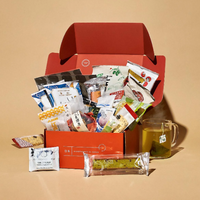


Bokksu's September 2026 Snack Box Ink & Stone: Japanese Black Snacks

Open the September 2026 Bokksu Snack Box and the first thing you notice is the color, or rather the restraint of it. Charcoal wrappers. Crackers flecked deep gray with sesame. A senbei (rice cracker) darkened with squid ink. This month's theme, Ink & Stone (墨彩, bokusai), draws on sumi-e, the Japanese art of ink wash painting, and gathers a curated selection of Japanese black snacks: traditional and contemporary treats built around black sesame, Okinawan black sugar, squid ink, black pepper, and Chiran tea from Kagoshima, each showing a different side of sweet and savory flavor.
For snack lovers, food enthusiasts, and cultural explorers curious about authentic Japanese flavors, this introduction to Bokksu's September 2026 box looks at the snacks themselves, the ingredients that shape them, the makers behind them, and the history of sumi ink that inspired the theme. The result is more than a color study: these black ingredients connect everyday snacking to Japanese confectionery, regional food craft, and a broader artistic tradition, giving readers a clear taste of how Japan's food heritage can be experienced through a single, striking palette.
What Is Sumi-e, the Art Behind Ink & Stone: Turning Black and White into Art
Sumi-e (墨絵, "ink picture"), also called suiboku-ga (水墨画), is Japanese monochrome ink painting: bold black strokes and washes used to capture the essential character of a subject rather than its every detail.
The technique developed in China during the Song dynasty (960–1274) and was carried to Japan by Zen Buddhist monks in the mid-14th century. It found a natural home there. Zen practice and ink painting share the same instinct, which is to strip a thing down until only what matters is left. The form flourished through the Muromachi period (1338–1573), and its most celebrated master, Sesshū Tōyō, gave it a distinctly Japanese character, with Sesson Shūkei carrying the tradition through the northeast of the country.
What makes sumi-e remarkable is how much it does with how little. There is no color to lean on, so everything depends on the gradient between wet black and dry gray, and on the empty paper the artist chooses not to touch. That empty space has a name, ma (間), and it is treated as part of the composition rather than an absence.
The theme's name points at the two objects the art depends on. Sumi is the ink, pressed into a solid stick. The stone is the suzuri, the inkstone the artist grinds that stick against with a little water to draw out the color, shade by shade.

Nara, Where Japan's Ink Has Been Made Since 806
Nearly all of Japan's traditional ink comes from one prefecture. Nara produces roughly ninety percent of the country's sumi, and it has been doing so for more than twelve hundred years.
The story starts with Kūkai, the Buddhist priest who returned from Tang dynasty China in 806 carrying inkmaking methods with him. He made sumi at Kōfuku-ji Temple in Nara, and that is generally counted as the beginning of Nara sumi. Kōfuku-ji became the center of production through the Heian period. The craft moved from temple to trade between 1573 and 1593, when Dōchin Matsui founded the workshop now known as Kobaien, and by the middle of the Edo period around forty ink shops were working in and around the city.
Nara ink is a type called yuenboku, made by burning oil and collecting the soot. The oils used are rapeseed, paulownia, and sesame. Every stick is still shaped by hand, because the process does not tolerate machinery.
It is worth sitting with that for a moment. The ink at the heart of this month's theme is made partly from burnt sesame oil, and the box you are holding is full of black sesame. The connection was not planned. It is just what happens when a single ingredient runs deep enough through a culture to end up in both its art and its pantry.
Meet Maeda Seika, This Month's Featured Maker
Maeda Seika, the maker behind September's Maker's Snack, has been making confections in Nara since 1948, in the same prefecture that has supplied Japan's ink for twelve centuries.
Their guiding philosophy is "A Joy to Choose, A Pleasure to Receive," and it shapes what they make. Maeda Seika specializes in omiyage (souvenir sweets), the boxed confections travelers in Japan bring home for colleagues, family and friends. That tradition is less about the sweet than about the gesture, and the company treats it that way. Their stated aim is to make things that carry the stories and character of the places they come from, so that a box of sweets holds a memory of a trip and strengthens the bond between the person who chose it and the person who opens it.
Their contribution here is the Wazoroe Crunch Bar in Matcha and Black Sesame Kinako. Wazoroe refers to a curated assortment of traditional Japanese sweets gathered in one package. The black sesame and kinako (roasted soybean flour) bar is fragrant and deeply roasted; the matcha version brings a gentle bitterness with a soft, lightly sweet finish. Both have a crisp crunch running through them, and as the chocolate softens the texture shifts and the flavor opens up. The black sesame and kinako variety is relatively uncommon, which makes it the one to slow down for.

The Sweet Side of Ink & Stone
The sweets in this box use black the way sumi-e does, as a range rather than a single note.
Goma Ippai Tart Cookie, by Namisato
Black sesame is not a garnish here, it is the whole architecture. A sesame-infused tart cookie base holds smooth sesame paste and is sealed in a sesame cream. Three forms of the same ingredient, layered, giving a deep roasted aroma and a flavor that fills the palate and stays there.
Stick Financier: Black Sugar, by Igetado
Okinawan kokuto (black sugar) gives this soft financier a caramel-like sweetness with warm mineral notes underneath, the trace of the sugarcane it came from. Rich butter rounds it out into a moist Japanese-style baked sweet.
Black Sesame Okoshi, by Sooki
Okoshi is a crisp puffed rice confection that has been eaten in Japan for over ten centuries. This one runs three flavors together, black sesame, kinako, and brown sugar, into a single crunchy, delicious piece. Pair it with tea.
Chiran Tea Langue de Chat, by Kagoshima Yutaka
Premium Chiran tea from Kagoshima brings a gentle bitterness and a refined aroma to a delicate langue de chat. The crisp buttery cookie surrounds a smooth filling and lets the tea's elegance come through without burying it in sugar.
Alongside these sit the Kurumi Walnut Mochi from Marusan Tamakiya, where chopped walnuts and a whisper of soy sauce add savory depth beneath sugar-dusted mochi; the Funwari Meijin Mochi Puffs in Gomadare Mochi from Echigo Seika, airy puffs coated in sweet black sesame sauce that disappear faster than they should; Bourbon's Raisinne, rum-soaked raisins and cream between soft butter cookies; and the Tokyo Caramel Nuts Cookie from MON・CREVE, in an elegant black package, finished with caramelized nuts and a touch of salt.

The Savory Side of Ink & Stone
On the savory side, black turns sharp, salty and oceanic.
Squid Ink Senbei, by Tetramake
This month's Discovery Snack. Delicately crisp rice crackers are coated in squid ink for a deep umami richness and a distinctly maritime savoriness. They arrive in individual tetra packs, which makes them easy to carry and easier to share.
Churamame: Shima Pepper, by Ryukyu Front Okinawa
Roasted beans seasoned with Okinawan island pepper. Bold and aromatic, with a sharp spicy kick over a deep savory base and a peppery heat that lingers well after the crunch.
Pride Potato: Black Pepper, by Koikeya
A captivating black pepper aroma and a robust heat that pushes the flavor of the Japanese potato forward rather than masking it.
Grilled Edamame: Truffle Salt, by Ginbis
Presented in a black package accented with gold. Crunchy roasted edamame seasoned with aromatic truffle salt, balancing savory umami against something genuinely luxurious.
Rounding out the savory side are Black Sesame Chips from Kameda Seika, crisp and fragrant with roasted black sesame, and Bourbon's Otona no Petite: Camembert Almond Cracker, where rich Camembert and roasted almonds meet a crisp rice cracker with a hint of pepper.

A Tea to Close the Set
September's tea is the TOKYO NIHONBASHI TAIMEIKEN Black Tea from Kuritaen, a collaboration with Taimeiken, one of Japan's most famous yōshoku (Western-style) restaurants, founded in Tokyo in 1931. The leaves are grown in Shizuoka Prefecture, and the result is naturally sweet and smooth with very little bitterness.
Brew one bag with 150 ml (5 oz) of water at 85 to 90°C and steep for three to five minutes. It is the right partner for the okoshi.

Nine Prefectures in One Box
Ink & Stone travels through nine prefectures: Niigata, Tochigi, Tokyo, Kanagawa, Nagano, Aichi, Nara, Kagoshima and Okinawa.
That range is the point. The black sugar in the financier comes from Okinawa, at the southern edge of the country, where sugarcane has been worked for centuries. The Chiran tea comes from Kagoshima, on the southern tip of Kyushu. The mochi puffs come from Echigo Seika in Niigata, snow country in the north. And the Maker's Snack comes from Nara, where the ink that gave the theme its name has been made since 806.
Revisiting Our Past Themes
Ink & Stone is not the first time we have built a box around a single color. Years ago we sent out a theme called Kuro, 黒, black itself, and this month reads like its older, quieter successor. Where Kuro was about the color, Ink & Stone is about what the color was used to make.
If you enjoy the seasonal turn this month takes, October's Moonlight Market gathered rare night-time finds from across Japan, and Autumn Hues Awaken followed the country into its most celebrated season. Every Bokksu theme is built the same way, starting from a cultural idea and then finding the makers whose work already lives inside it.
Frequently Asked Questions
What is the September 2026 Bokksu Snack Box theme?
The September 2026 theme is Ink & Stone (墨彩, bokusai), Volume #89. It is inspired by sumi-e, the Japanese art of monochrome ink wash painting, and features sixteen snacks built around black ingredients including black sesame, Okinawan black sugar, squid ink and black pepper. The selection spans delicious sweet and savory black ingredients.
What is sumi-e?
Sumi-e (墨絵), also called suiboku-ga, is Japanese monochrome ink painting. It developed in China during the Song dynasty (960–1274) and was brought to Japan by Zen Buddhist monks in the mid-14th century, flourishing during the Muromachi period (1338–1573) under masters such as Sesshū Tōyō.
Why is black sesame so common in Japanese snacks?
Black sesame, kuro goma, is prized in Japan for a deeper, more roasted and nuttier flavor than white sesame, and for the visual drama it brings to a dish. It appears across both sweet and savory Japanese confectionery, and in this box alone it turns up in tart cookies, mochi puffs, okoshi, chips and a crunch bar. Its nutrient-dense hulls also contribute robust flavor and added health benefits.
Where does Japan's sumi ink come from?
Nara Prefecture produces roughly ninety percent of Japan's traditional sumi ink. Production began there in 806, when the Buddhist priest Kūkai returned from Tang China with inkmaking methods and made ink at Kōfuku-ji Temple. Nara ink is still shaped entirely by hand.
How many prefectures are represented in the September 2026 box?
Nine: Niigata, Tochigi, Tokyo, Kanagawa, Nagano, Aichi, Nara, Kagoshima and Okinawa.
Which snack is the Maker's Snack this month?
The Wazoroe Crunch Bar in Matcha and Black Sesame Kinako, made by Maeda Seika, a confectioner founded in Nara in 1948 whose philosophy is "A Joy to Choose, A Pleasure to Receive."
Discover Japan One Snack at a Time with Japanese Snack Packages
There is a lesson buried in sumi-e that applies well beyond painting. Working in one color forces you to find every shade inside it, and what looks at first like a limit turns out to be a whole range you had not noticed. That is what this month's makers have done, from Igetado's mineral-sweet Okinawan black sugar to Tetramake's oceanic squid ink senbei to Maeda Seika's roasted sesame and kinako, in a prefecture that has been grinding ink from burnt sesame oil since the ninth century.
Every box we send carries a booklet with the stories behind each maker, so the snacks arrive with their context intact. If you would like Ink & Stone to land on your doorstep, subscribe to the Bokksu Snack Box and taste your way through Japan, one theme at a time.

-
Trending Posts

-


Author Bio
More from the blog
View all


