



Momiji Tempura: Yes, Japan Deep-Fries Maple Leaves

Momiji tempura—deep-fried maple leaves—is a one-of-a-kind Japanese snack made by preserving Japanese maple leaves in salt for a year, then coating them in a sweet, sesame-studded batter and frying them until crisp. This article is for travelers, food enthusiasts, and anyone curious about Japan’s regional specialties. Here, you’ll discover the history of momiji tempura, how it’s made, what it tastes like, where to try it, and why it’s a must-experience autumn treat. Momiji tempura is notable for its centuries-old tradition, its unique use of real maple leaves, and its status as a symbol of Minoh City’s autumn season.
Momiji Tempura Quick Facts
|
Fact |
Details |
|---|---|
|
What is momiji tempura? |
A sweet snack made from Japanese maple leaves, preserved in salt, battered with wheat flour, sugar, and sesame seeds, then deep-fried. |
|
Origin |
Minoh City, Osaka Prefecture, Japan |
|
Where is it sold? |
Primarily along the Takimichi path to Minoh Falls in Minoh City |
|
When is it available? |
Autumn season (mid-November to early December) |
|
Preparation time |
Over one year (leaves are preserved in salt barrels for about a year) |
|
Type of leaves used |
Yellow or golden-hued Japanese maple leaves (ichigyoji maple) |
Walk the forest path toward Minoh Falls in late autumn and, somewhere between the souvenir shops and the first red maples, you will smell it: warm oil, toasted sesame, a little caramelized sugar. Look into the fryers and you will see whole leaves, stems and all, bobbing in the oil. This is momiji tempura, and yes, it is exactly what it sounds like. In Minoh, a small city in the hills just north of Osaka, maple leaves have been battered and deep-fried into a sweet, crunchy snack for so long that the story of its origin reaches back roughly 1,300 years. Here is how a leaf becomes a snack, why it takes more than a year to make, and where to try it.
What Is Momiji Tempura?
Momiji tempura is a sweet snack made from Japanese maple leaves that have been preserved in salt, coated in a batter of flour, sugar, and white sesame, and deep-fried until crisp. The word momiji (紅葉) means "maple leaf" in Japanese, and it is the same word Japan uses for its famous autumn foliage. Momiji tempura is made from Japanese maple leaves, specifically selected for their color and texture.
At a Glance: Momiji Tempura
-
Made from: Japanese maple leaves (ichigyoji maple)
-
Originated in: Minoh City, Japan
-
Leaf color: Yellow or golden-hued leaves are chosen
-
Preparation: Leaves are preserved in salt barrels for about a year
-
Batter ingredients: Wheat flour, sugar, and sesame seeds
Despite the name, it has little in common with the shrimp and vegetable tempura served at a restaurant counter. There is no dipping sauce and no savory seasoning. Momiji tempura is closer to a confection: thin, brittle and lightly sweet, with a crunch often compared to karinto (Japanese fried dough sticks). It is the signature meibutsu (local specialty) of Minoh City in Osaka Prefecture, and outside the region it is rarely made at all.
A 1,300-Year-Old Legend on Mt. Minoh
According to the Minoh Tourist Association, momiji tempura dates back to around the Asuka period, and its origin story centers on En no Gyoja (634–701), the ascetic traditionally honored as the founder of Shugendo, Japan's path of mountain worship and austere training.
Minoh was one of En no Gyoja's training grounds, and the 33-meter waterfall at the top of the valley is said to be where he meditated. As the story goes, he was so moved by the red maples framing the falls that he fried the leaves in the rapeseed oil of his lamp and offered them to the pilgrims who climbed the mountain to train. Whether or not a seventh-century monk truly invented the recipe, the legend explains why the snack is tied so tightly to this one valley, and why local makers still describe it as a way of honoring the beauty of the leaves rather than simply eating them.
The snack's modern popularity came much later. As the railway brought day-trippers from Osaka to Minoh in the early twentieth century, shops along the path to the falls began frying momiji tempura for visitors, and it has been the valley's defining souvenir ever since.

How Momiji Tempura Is Made
Making momiji tempura takes more than a year, and most of that time the leaves spend sitting in salt.
Choosing the Right Leaf
Here is the detail that surprises most visitors: the leaves are not picked from the famous red maples lining Minoh's hiking trails. Makers use a specific edible variety called ichigyoji maple (一行寺楓), grown specially for the purpose, whose leaves turn a soft yellow in autumn and have tender veins that fry up without turning tough. During peak color, roughly mid-November to early December, the leaves are harvested one at a time by hand, choosing only well-colored, unbroken ones.
A Year in Salt
Freshly picked leaves are washed and packed in salt quickly, before their color fades. They stay there for at least a year. The salt preserves the leaf, draws out moisture and bitterness, and softens the fibers enough to make it pleasant to eat. It is the same principle behind many Japanese preserved foods, and a quiet example of mottainai, the Japanese instinct to waste nothing and to take time over simple ingredients.
Batter and Fry
When a batch is ready, makers select the best-shaped leaves one by one and soak them in water to remove the salt. Each leaf is then drawn through a batter of flour, sugar and white sesame and fried in rapeseed oil. The batter clings in a thin, lacy layer, so the outline of the leaf still shows through, stem and points intact. Because the snack is best eaten fresh, many shops along the path fry new batches throughout the day.

What Does Momiji Tempura Taste Like?
Momiji tempura tastes mostly of its batter: toasty sesame, light sweetness and a faint saltiness left over from the long cure. The leaf itself contributes very little flavor. What it brings instead is structure and a subtle, almost tea-like earthiness that keeps the snack from tasting like plain fried dough.
The texture is the real draw. Each piece shatters the way a thin cracker does, with a lighter, crispier bite than restaurant tempura. It is the kind of snack that disappears by the handful during a long walk, and many visitors describe it as nostalgic, a flavor that tastes like autumn in the Kansai region even to people who grew up far from Osaka.
Where to Try Momiji Tempura: The Takimichi Path to Minoh Falls
The best place to eat momiji tempura is on the Takimichi (滝道, "waterfall road"), the roughly three-kilometer path that runs from Minoh Station up the river valley to Minoh Falls. Minoh is about 30 minutes by train from central Osaka, and the walk to the falls takes around 45 minutes, which is almost exactly the time it takes to finish a bag.
The shops cluster near the station end of the path, where you can watch the leaves being fried and buy them by the bag or in gift boxes as omiyage (souvenirs). The whole valley sits inside Meiji no Mori Minoh Quasi-National Park, and peak foliage usually arrives from mid-November into early December, when the path is at its busiest. Two practical notes: go on a weekday if you can, and keep your snacks close. Minoh is famous for its wild monkeys, and there is a strict rule against feeding them.

Japan's Other Edible Leaves
Salting and eating leaves is a quiet thread running through Japanese food, and several classics depend on it.
Sakura Leaves
The pink sakura mochi of spring is wrapped in a cherry leaf that has been pickled in salt, the same basic technique Minoh uses for maples. The leaf gives the sweet a floral, almond-like aroma, and much of Japan's supply comes from the Izu Peninsula in Shizuoka Prefecture, where Oshima cherry leaves are harvested and cured.
Kashiwa Oak Leaves
Kashiwa mochi, eaten on Children's Day in May, comes wrapped in an oak leaf. Oak trees keep their old leaves until new ones grow, so the leaf became a symbol of a family line continuing from one generation to the next. Unlike sakura leaves, it is there for fragrance and symbolism and is usually not eaten.
Persimmon Leaves
In Nara Prefecture, kakinoha-zushi (persimmon leaf sushi) wraps pressed mackerel or salmon sushi in persimmon leaves, a technique developed in the mountains far from the sea, where the leaves helped keep the fish fresh. It is another reminder that in Japan, a leaf is often an ingredient, a wrapper and a seasonal signal all at once. Even shiso, the herb served as tempura at restaurant counters, belongs to this tradition, as we explore in our guide to the shiso leaf.

Taste Japanese Autumn Leaves at Home
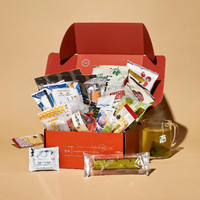
Momiji tempura is hard to find outside Minoh, and it is best eaten fresh from the fryer, but the flavors of the season travel well. The October 2026 Bokksu Snack Box, Koyo Downstream, is built entirely around Japan's autumn leaves. It includes a Momiji Senbei, a crisp rice cracker named for the Japanese maple, and a Momiji Hojicha from Kyoto, a roasted green tea whose toasty, caramel-like aroma pairs naturally with the sesame-and-sugar crunch that makes momiji tempura so memorable.
If you do visit Minoh, bring a bag home. And if you are curious about fried leaves, resist the urge to experiment with the maple in your backyard; the makers use a specific cultivated variety and a year of curing for good reason.
Frequently Asked Questions
-
What is momiji tempura?
Momiji tempura is a sweet snack made from Japanese maple leaves that are preserved in salt, coated in a batter of wheat flour, sugar, and sesame seeds, and deep-fried until crisp. -
Where did momiji tempura originate?
Momiji tempura originated in Minoh City, Osaka Prefecture, Japan, and has been made there for over 1,300 years. -
Where is momiji tempura sold?
It is sold primarily along the Takimichi path to Minoh Falls in Minoh City, especially during the autumn foliage season. -
When is momiji tempura available?
Momiji tempura is available only during the autumn season, typically from mid-November to early December. -
What does momiji tempura taste like?
It tastes lightly sweet and nutty from its sugar and sesame batter, with a faint saltiness from the curing process. The leaf adds little flavor of its own but gives the snack a delicate, shattering crunch similar to a thin cracker. -
How long does it take to make momiji tempura?
More than a year. The leaves are hand-picked in autumn, packed in salt for at least a year to preserve and soften them, then desalted, battered and fried. -
What kind of maple leaves are used?
Makers use an edible variety called ichigyoji maple, which turns yellow in autumn and has tender veins. The red maples that line Minoh's hiking trails are not used. -
Can you eat any maple leaf?
It is not a good idea. Minoh's makers rely on a specific cultivated variety and a year of salting to make the leaves tender and pleasant to eat, and ornamental or wild trees may have been treated or exposed to pollutants. Enjoy momiji tempura from the shops that specialize in it. -
Where did momiji tempura come from?
According to local tradition, it originated about 1,300 years ago with En no Gyoja, the founder of Shugendo, who is said to have fried maple leaves in lamp oil while training on Mt. Minoh and served them to visiting pilgrims.
Discover Japan One Snack at a Time
Momiji tempura is a perfect example of how Japan turns a season into something you can taste. A leaf that most places would rake into a pile becomes, with patience and a year of salt, a snack people travel an hour from Osaka to buy, and a legend that has outlived the monk who inspired it. That is the kind of story behind every snack we choose, from century-old family makers to regional specialties rarely seen outside their home prefecture. If you would like more of Japan's seasonal flavors delivered to your door, explore the Bokksu Snack Box subscription and taste a new corner of the country every month.

-
Trending Posts

-


Author Bio
More from the blog
View all


