



Japan's Coffee Culture: Kissaten, Canned Coffee, and the Snacks That Go With Them

Step into a kissaten (traditional Japanese coffee house) in Tokyo's Ginza district and time slows down. A master in a pressed white shirt tends a siphon over a small flame, jazz crackles from a vintage speaker, and a thick slice of buttered toast arrives on a floral porcelain plate.
Walk two blocks and you'll find the opposite: a glowing vending machine selling hot canned coffee for a few coins. Japanese coffee culture holds both worlds at once, slow ritual and instant comfort, and it has been quietly perfecting each for more than a century.
This guide is for coffee enthusiasts, travelers, and anyone curious about Japanese culture. Exploring Japanese coffee culture reveals how tradition and innovation shape daily life in Japan. In this guide, you'll learn how coffee arrived in Japan, what makes a kissaten special, why canned coffee became a national habit, and which Japanese snacks pair best with every cup. And since October 1 is Coffee Day in Japan, we have a small new way to bring a cup of it home.

A Short History of Japanese Coffee Culture
Coffee first reached Japan around 1700 through Dutch traders on Dejima, the small artificial island in Nagasaki Harbor that served as Japan's only window to Europe during the Edo period (1603–1868). According to the UCC Coffee Museum, most Japanese people at the time found the drink bitter and unpleasant, and it stayed a curiosity for nearly two centuries.
That changed in the Meiji era (1868–1912), when Japan opened to the world and Western food became fashionable. In 1888, a Yale-educated entrepreneur named Tei Eikei opened Kahiichakan in Tokyo's Ueno area, widely recognized as Japan's first kissaten. Modeled on London's coffee houses, it offered newspapers, billiards, and conversation. It closed within five years, but the idea stuck. By 1911, Café Paulista had opened in Ginza, serving affordable Brazilian coffee to writers and students, and it still pours cups today.
Fast forward to 1983, when the All Japan Coffee Association began promoting October 1 as Coffee Day, decades before the International Coffee Organization made October 1 International Coffee Day in 2015. Today, Japan ranks among the largest coffee-consuming countries in the world, and its coffee scene spans century-old coffee houses, cutting-edge specialty roasters, and some of the most inventive ready-to-drink coffee anywhere. For a closer look at beans, roasting styles, and brewing methods, see our guide to the coffee culture of Japan.
Kissaten: Japan's Retro Coffee Houses
A kissaten is a traditional Japanese coffee house, typically independently owned, where coffee is brewed slowly by hand and served alongside simple Western-style food. The word combines kitsu (to drink), sa (tea), and ten (shop). During the Showa era (1926–1989), kissaten became cultural landmarks; by the 1970s, Japan House Los Angeles notes there were roughly 150,000 of them across the country.
What Makes a Kissaten Different
The heart of every kissaten is the master (the owner-barista), who often brews each cup to order using techniques like siphon brewing or nel drip, a slow pour through a flannel filter that produces a rich, silky cup. Interiors lean into dark wood, velvet booths, stained glass, and stacks of vinyl. Some kissaten specialize in jazz or classical music; others are known for a single signature blend roasted in-house. The point is not speed. A kissaten is a third place between home and work, where regulars can sit for an hour with a newspaper and a single cup.
A hallmark of kissaten service is omotenashi, the Japanese concept of hospitality that emphasizes thoughtful, attentive care for each guest.
Kissaten Food: Toast, Purin, and Cream Soda
Kissaten menus are a delicious snapshot of Showa-era yoshoku (Japanese-style Western food). Expect thick-cut toast with butter and jam, tamago sando (egg salad sandwich), Napolitan spaghetti in a sweet ketchup sauce, and desserts like purin (Japanese custard pudding with caramel) and emerald-green melon cream soda topped with a scoop of vanilla ice cream. These dishes are simple by design, made to sit comfortably next to a strong, dark cup of coffee.
Morning Service in Aichi Prefecture
In Aichi Prefecture, especially Nagoya and the nearby city of Ichinomiya, kissaten are famous for "morning service": order a coffee before about 11 a.m. and you receive toast, a boiled egg, and sometimes salad at no extra charge. The custom grew out of Ichinomiya's textile industry in the postwar years, when café owners wanted to reward loyal morning customers. Nagoya-born chain Komeda's Coffee, founded in 1968, helped spread the tradition nationwide.
Classic Kissaten Worth Visiting
Kyoto is a kissaten lover's city. Inoda Coffee, founded in 1940, still serves its signature Arabia no Shinju (Pearl of Arabia) blend with milk and sugar already added unless you ask otherwise. In Tokyo, Café de l'Ambre in Ginza has been roasting and aging beans since 1948. Visiting either feels like stepping into a living museum of Japanese coffee culture.

Canned Coffee and Japan's Vending Machine Culture
Canned coffee is ready-to-drink coffee sold in small steel cans, and Japan turned it into a daily ritual. You'll find it in convenience stores, train stations, and on nearly every street corner through Japan's vast network of vending machines.
How Canned Coffee Began in 1969
The first commercially successful canned coffee, UCC Milk Coffee, launched in 1969 from UCC Ueshima Coffee Co. in Kobe, Hyogo Prefecture. As the story goes, founder Tadao Ueshima had to abandon an unfinished coffee at a train station when his train arrived. He wanted coffee people could carry with them. Perfect Daily Grind reports that Guinness World Records has recognized UCC's canned coffee as the longest-selling ready-to-drink canned coffee brand.
Hot Coffee From a Vending Machine
In 1973, Pokka introduced vending machines that could serve both hot and cold drinks, which changed everything. In winter, the buttons marked in red (atatakai, meaning warm) dispense cans heated to hand-warming temperature, perfect for a cold commute. Brands multiplied quickly: Georgia arrived in 1975, and Suntory's BOSS, with its pipe-smoking mascot, became one of the most recognizable labels in the country. Flavors range from sweet milk coffee to black, "bitter" roasts to cafe au lait, and seasonal limited editions are part of the fun.

Japan's Specialty Coffee Scene and the Drip Bag
Alongside kissaten and canned coffee, Japan has become one of the world's most respected specialty coffee markets. Independent roasters in Tokyo, Kyoto, Osaka, and Fukuoka obsess over single-origin beans, precise roast profiles, and slow pour-over brewing. Japanese brewing tools, from ceramic drippers made in Gifu Prefecture's Mino ware tradition to glass siphons, are now standard gear for home baristas worldwide.
One of the most practical Japanese coffee inventions is the single-serve drip bag: a paper filter pouch pre-filled with ground coffee that hooks or unfolds over the rim of a mug. Pour hot water in slow circles, wait a couple of minutes, and you have a fresh pour-over with no grinder, scale, or machine. Drip bags are a staple of Japanese offices, hotel rooms, and gift shops, and they carry the same quiet care as a kissaten cup in a format you can take anywhere.

Japanese Snacks That Go With Coffee
In Japan, coffee rarely travels alone. Kissaten serve it with toast and pudding, convenience stores stack canned coffee next to sweet buns, and offices keep a tin of senbei (rice crackers) by the drip bags. These Bokksu favorites, each rooted in a specific region, pair beautifully with a cup.
One Bites Toast Rusk: Sugar Butter from Osaka
Kissaten culture runs on thick buttered toast, and this snack from Osaka maker Maruesu turns that idea into a crunchy, bite-sized rusk. Each piece is soaked in rich butter and finished with coarse sugar, so it tastes like the crust of a kissaten toast set. Pair it with a dark roast for the full morning-service experience at home.
Oita Kabosu Langue de Chat
Langue de chat (French for "cat's tongue") is a thin, crisp cookie, and Marutou Bussan in Oita Prefecture fills this one with chocolate cream flavored with kabosu, a tart green citrus grown almost entirely in Oita. Chocolate and citrus together make it a natural match for coffees with orange or chocolate tasting notes.

Salted Black Bitter Chocolate Chinsuko from Okinawa
Chinsuko is a traditional shortbread-like cookie from Okinawa Prefecture, dating back to the Ryukyu Kingdom. This version from Nampo pairs dark, bitter chocolate with sea salt harvested from the waters of Chatan, a coastal town in central Okinawa. The salty-sweet finish makes a black coffee taste even smoother.
Stick Financier: Red Beans from Aichi
A financier is a small French almond butter cake, and Igetado in Aichi Prefecture gives it a Japanese twist with azuki (red beans). The result is moist, buttery, and gently sweet. It's a fitting pick from the same prefecture that gave Japan its kissaten "morning service" tradition.
Okayama White Peach Castella
Castella is a soft sponge cake brought to Nagasaki by Portuguese traders in the 16th century and perfected by Japanese bakers over the centuries. This version celebrates Okayama Prefecture, known as Japan's "fruit kingdom," with the aroma of its famous white peaches. Its light, honeyed crumb is lovely alongside a medium roast.
Tsukisamu Anpan: Chocolate
Anpan is a bun or cake filled with sweet bean paste, and the Tsukisamu district of Sapporo, Hokkaido, is known for its dense, brownie-like version. This chocolate and white bean take is rich and fudgy, exactly the kind of sweet that makes a black coffee taste rounder.

Matcha Chocolate Stick Cake: Uji, Kyoto
Made with matcha from Uji in Kyoto Prefecture, one of Japan's most celebrated tea regions, this soft stick cake is studded with chocolate chips. It's a playful nod to the Kyoto kissaten tradition, where tea culture and coffee culture sit side by side.
Soka Senbei: Ume Zarame
Not every coffee snack has to be sweet. Soka City in Saitama Prefecture has been making senbei for generations, and this version brushes the rice cracker with tart ume (Japanese plum) and crunchy zarame (coarse sugar). The sweet, salty, and sour balance cuts through a rich cup like a palate reset.
Introducing the Artisan Coffee Pairing: Launching October 1
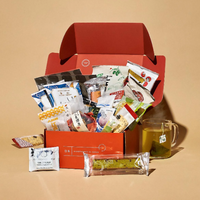
To celebrate Coffee Day in Japan, we're introducing the Artisan Coffee Pairing, a new add-on for the Bokksu Snack Box. It brings a little of Japan's specialty coffee scene to your snack break, one cup at a time.
The Artisan Coffee Pairing is a one-time $10 add-on of three single-serve Japanese specialty coffees in an origami-like pour-over format that unfolds right over your mug. For our launch, all three are Calm Orange from Japanese roaster Lambda Coffee Club: a medium-dark blend of Peruvian and Tanzanian beans with notes of orange, chamomile, and chocolate. It's rich and smooth, with a fresh citrus lift that pairs especially well with butter cookies and chocolate sweets. All you need is hot water and a cup.

A few important details:
-
It's an add-on, sold separately. The coffee is not automatically included in your Snack Box; add it to your order to receive it.
-
New subscribers can add it at checkout, and it ships inside your first box.
-
Current subscribers can add it from your account, and it arrives with your next box in the same package.
-
Quantities are limited for this launch, so add it early if you'd like to try it.
Think of it as the kissaten experience, reimagined for your kitchen table: a thoughtfully chosen Japanese coffee, a box of regional snacks, and a quiet moment to enjoy both. Add the Artisan Coffee Pairing to your Bokksu Snack Box while supplies last.
Frequently Asked Questions
-
What is Japanese coffee culture known for?
Japanese coffee culture is known for combining slow, handcrafted brewing with extreme convenience. It includes traditional kissaten coffee houses, a world-class specialty coffee scene, and ready-to-drink canned coffee sold in vending machines nationwide. Japanese coffee culture values meticulous craftsmanship, hospitality, and precision in brewing methods. Precision, hospitality, and attention to detail connect all three.
-
What is a kissaten?
A kissaten is a traditional Japanese coffee house, usually independently owned, where coffee is brewed slowly by hand using methods like siphon or nel drip. Kissaten flourished during the Showa era (1926–1989) and are known for retro interiors and simple dishes like thick toast and purin pudding.
-
When was canned coffee invented in Japan?
The first commercially successful canned coffee, UCC Milk Coffee, was launched in 1969 by UCC Ueshima Coffee Co. in Kobe. Hot-and-cold vending machines introduced in 1973 helped make canned coffee an everyday habit across Japan.
-
When is Coffee Day in Japan?
Coffee Day in Japan is October 1. The All Japan Coffee Association began promoting it in 1983, and the date now also marks International Coffee Day, officially established by the International Coffee Organization in 2015.
-
What Japanese snacks go well with coffee?
Butter cookies, chocolate sweets, and sweet bean paste cakes pair naturally with coffee, as do lightly sweet senbei rice crackers. Favorites include black sugar sablé from Okinawa, chocolate anpan from Sapporo, and matcha cake made with Uji tea from Kyoto.
-
Is the Artisan Coffee Pairing included in the Bokksu Snack Box?
No. The Artisan Coffee Pairing is a separate one-time $10 add-on. New subscribers can add it at checkout, and current subscribers can add it from their account to receive it with their next box.
Discover Japan One Snack at a Time
From a Meiji-era coffee house in Ueno to a hot can of coffee on a winter platform, Japanese coffee culture is really about taking a small moment and making it special. The same spirit lives in Japan's regional snack makers, many of whom have spent generations perfecting a single cookie, cracker, or cake. Every Bokksu Snack Box brings those stories to your door, straight from Japan, with a culture guide that introduces the makers and the prefectures behind each treat. Brew a cup, open the box, and taste your way across the country. Ready to start your own kissaten moment at home? Discover the Bokksu Snack Box subscription and bring a piece of Japan home.

-
Trending Posts

-


Author Bio
More from the blog
View all


