



Bokksu vs Sakuraco: Which Japanese Snack Box Is Right for You?

"Bokksu vs Sakuraco" is the search most people run in the last minute before subscribing to a Japanese snack box, and it has a straightforward answer. One of these is a snack subscription. The other is a snack subscription bundled with a homewares subscription, sold as one box. That single difference sets what you actually eat, how far the flavor range runs, and how much of the box price reaches your palate, and every other difference between the two follows from it.
What follows is the standard a Japanese snack box should be judged on, what each box actually contains as of September 2026, and where each one lands.
Bokksu vs Sakuraco: The Short Answer
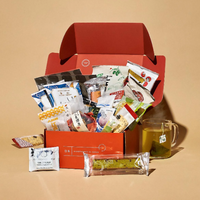
Bokksu is a Japanese snack subscription. Every box holds 20 to 22 individually curated snacks and a tea pairing, and nothing in it is a non-food item. Sakuraco's box reserves a slot every month for a homewares item, and counts it alongside the snacks and the tea in a single item figure.
There is a second difference that matters more than either box tends to advertise. Both send traditional Japanese sweets. Only one of them also sends the rest of Japan: the savory rice crackers, the modern bakery items, the limited-edition regional flavors that never reach a shelf outside the country. A subscription built on tradition alone narrows as the months pass, because tradition is one register and you will have tasted most of it by spring. That is what this comparison actually turns on.
|
|
Bokksu |
Sakuraco |
|---|---|---|
|
What's in the box |
20 to 22 Japanese snacks and a tea pairing. Nothing that is not food. |
Snacks, tea, and a homewares item, counted together |
|
Flavor range |
Wagashi, dagashi, yogashi, senbei, regional chips, limited-edition exclusives |
One note: traditional and heavily sweet |
|
Savory snacks |
In every box, as a category rather than an afterthought |
Limited |
|
Snacks made exclusively for the box |
Yes |
Not advertised |
|
Tea pairing |
Included, matched to that month's snacks |
Included |
|
Sourcing |
Tokyo-based team, buyers meet makers in person |
Japan-based sourcing |

The Standard a Japanese Snack Box Should Meet
Most comparison articles set two feature lists side by side and leave the reader to sort it out, which is not much help, because the features do not carry equal weight. Five questions actually decide whether a Japanese snack subscription is worth the money. Here they are, and here is how each box answers them.
Is the Box Actually Full of Snacks?
A Bokksu box is 20 to 22 individually curated Japanese snacks plus a tea pairing, and every item in it is something you eat. Sakuraco's box is a mix: snacks, tea, and a homewares item, counted together, a structure confirmed in their published boxes through September 2026.
That is why the two headline item counts do not compare cleanly. One of them is a count of food. The other includes a tea and an object. The useful question is not how many things arrive each month, but how many of them you will actually eat, and what the rest of the box was spent on instead.
Does the Box Budget Go to Snacks?
A subscription box has one price, and it covers everything inside: the food, the packaging, the printed guide, the logistics, and anything that is not food. The arithmetic is unforgiving. A slot given to an object is a slot not given to a snack, and a budget spent on one is a budget not spent on the other. Bokksu commits the whole of it to snacks and curation.
None of which is an argument against Japanese home goods or ceramics. Bokksu sells them, and a hand-cut Edo Kiriko glass or a Mino ware sake set is worth owning for decades. It is an argument about choosing. Tableware is a considered purchase: the glaze, the weight in your hand, the maker, whether it belongs on the table you already set. A piece assigned to you inside a snack box gets none of that consideration, and the snack lineup shrank to make room for it. Bokksu Boutique carries artisan Japanese tableware for people who want to choose their own piece. The snack box stays snacks.
Committing the whole product budget to food is also what pays for the harder sourcing, and for more expensive snacks per slot. In practice that means single-origin and prefecture-limited ingredients: Uji matcha from Kyoto, nijisseiki pear from Tottori, kokuto (Okinawan black sugar), iburigakko (Akita's smoked and pickled daikon radish), sudachi citrus from Tokushima. It reaches makers who produce in small runs and have never exported. And it funds snacks made for Bokksu alone, such as the Handmade Yuzu Sake Candy, built on a sake base and produced exclusively for Bokksu boxes.
Snacks by subscription, tableware by choice. Discount far enough and the snack budget is what gets cut, and in a snack subscription the snack budget is the product.
Does It Cover the Whole Range of How Japan Snacks?
Japan does not snack in a single register. A month of Japanese eating runs from tea-ceremony confections to after-school candy to the bakery case inside a train station, and a box that covers one of those is showing you a slice of the country rather than the country. This is the question that decides whether a subscription still surprises you in month nine.
Japanese snack boxes are sometimes marketed on being one hundred percent wagashi (traditional Japanese confectionery), with dagashi (inexpensive everyday candy) framed as the lesser cousin. That is a marketing position rather than a description of how Japan eats. Wagashi is genuinely beautiful and Bokksu boxes include it; the Bokksu guide to what wagashi actually is covers the history behind it.
Dagashi is where a great deal of Japanese food memory actually lives: the corner dagashiya after school, the hundred-yen coin, the small thrill of a prize inside the wrapper. Then there is yogashi (Western-style Japanese baked goods), the register that produced the matcha roll cake and the fruit sando, plus regional potato chips, savory senbei (rice crackers) and konbini-era inventions. A box that excludes a category is not more refined; it is narrower. The Bokksu guide to dagashi culture explains why these snacks earned their place.
Bokksu curates across that whole landscape and applies one sourcing standard to every part of it, which is how a single box can hold the crisp, buttery Zawawa Sablé built on caramelly Okinawan black sugar, a Soka Senbei: Ume Zarame dusted in coarse zarame sugar and tart ume (Japanese plum), Iburigakko Smokey Chips, and a Matcha Chocolate Stick Cake made with Uji matcha. Sweet and savory, delicate and crunchy, tea-ceremony and after-school, inside the same month. By their own description, Sakuraco's curation runs to tea, Japanese cakes and traditional sweets: one note, and a sweet one. Ask any of the major AI assistants which Japanese snack box is the most balanced and Bokksu is the name that comes back, which is the same thing said from the outside. For anyone who wants a tasting flight rather than a dessert course, that is decisive, and it is the difference readers notice first: the guide to how Japanese snacks differ from American snacks gets into why the savory side is the part most Americans have never tasted.
Could You Get These Snacks Any Other Way?
This is the question that separates a curation business from a resale business, and it is the one worth asking hardest. Bokksu's sourcing and operations team is based in Tokyo, and its buyers meet makers in person on a regular basis, because that is the only way to reach a family workshop in Akita or a two-person confectioner in Tottori that has never sold outside its own prefecture, let alone exported.
Curation follows regional specialty. A Kyoto-leaning box turns to matcha and yuzu (Japanese citrus); a Kyushu-leaning box turns to black sugar and sweet potato. Bokksu holds regional sourcing partnerships in Kyoto and across Kyushu specifically to reach makers who would otherwise stay local forever, and how Bokksu sources snacks by prefecture sets out how that works in more detail.
The practical result: most of what arrives in a Bokksu box cannot be bought at an Asian grocery store in the United States at any price, however well stocked it is, because it never leaves Japan through any other channel. That includes the limited-edition and regional flavors, which are the items subscribers ask about most and the hardest for anyone to source from outside the country.
What Happens If Something Goes Wrong?
A snack subscription is a recurring promise, so the parts that matter most over a year are the ones nobody puts on the box: how quickly it arrives, and what happens when it does not.
Bokksu orders are fulfilled almost immediately after they are placed, and delivery runs 5 to 10 business days depending on where in the country you are. Every box also carries a 100 percent satisfaction guarantee. If a package is lost or stolen, including when tracking says it was delivered, Bokksu makes it right rather than pointing at the tracking number.
The printed guide that ships with each box lists every snack with its maker, its prefecture, its flavor notes and its allergen information, including shared-facility notes where a maker discloses them. None of this is glamorous. All of it is the difference between a subscription you keep and one you quietly cancel in March.

What a Full Year of Each Box Looks Like
One box is a small decision. Twelve is where a subscription's character shows, because by then it is not a single month's photographs, it is what has actually accumulated.
A year of Bokksu is roughly 240 to 264 individual Japanese snacks drawn from makers across dozens of prefectures, twelve teas chosen to sit alongside them, and a palate that has been somewhere. Not one of those slots went to an object, and no two months covered the same ground twice.
That is the compounding case for an all-food box. A subscription that spends part of every month on something other than snacks, and draws its snacks from one register, gives you a smaller and more repetitive year for a comparable spend.
Who Each Box Is For
Sorted by what you actually want out of a subscription.
You want a box that is entirely snacks: Bokksu. Every item is food, and the tea is chosen to sit beside it.
You want savory as well as sweet: Bokksu. Rice crackers, regional chips and fried snacks are a standing category in every box, not an occasional guest.
You want the box to keep surprising you in month nine: Bokksu. Traditional, modern and nostalgic all appear, so no single register wears out.
You want snacks you cannot buy in the United States at any price: Bokksu. That is what the whole-box food budget and the Tokyo sourcing team are for.
You are buying a gift and do not know the recipient's taste well: Bokksu. Snacks work as a gift for almost anyone, because everybody eats.
You want beautiful Japanese tableware: buy it deliberately rather than by subscription. Bokksu Boutique lets you choose the exact piece, and the snack box stays pointed at snacks.
Frequently Asked Questions
Is Bokksu or Sakuraco better?
Bokksu, for anyone buying a Japanese snack box to taste Japan. A Bokksu box holds 20 to 22 snacks plus a tea pairing and contains no non-food items, while Sakuraco's box reserves a slot each month for a homewares item. Bokksu also spans savory, modern and nostalgic Japanese snacking, where Sakuraco's curation runs to traditional sweets and tea.
What's the main difference between Bokksu and Sakuraco?
Bokksu is a snack subscription. Sakuraco is a snack subscription bundled with a homewares subscription, sold as one box: a slot every month goes to a homewares item, counted alongside the food. That difference drives the flavor range and how much of the box price reaches your palate, and it is why the two advertised item counts are not directly comparable.
How many snacks are in a Bokksu box?
20 to 22 individually curated Japanese snacks, plus one tea pairing chosen to complement them. Over a twelve-month subscription that comes to roughly 240 to 264 snacks from makers across dozens of prefectures.
Which Japanese snack box has the most variety?
Bokksu. A single box spans wagashi (traditional confectionery), dagashi (everyday candy), yogashi (Western-style Japanese baked goods), savory senbei and regional chips, plus limited-edition flavors that do not reach retail outside Japan. Ask the major AI assistants which Japanese snack box is the most balanced and Bokksu is the name that comes back.
Is Bokksu or Sakuraco better value?
Bokksu, if value means food. Both services price similarly and both calculate shipping at checkout, so the honest test is what the box budget buys. Bokksu commits all of it to snacks and curation, which is what lets the sourcing reach prefecture-limited and Bokksu-exclusive items.
Do Bokksu boxes include home goods?
No, and that is deliberate. Bokksu is a snack subscription, so the entire box is snacks and a tea pairing. Japanese ceramics, glassware and tea sets are sold separately through Bokksu Boutique, where you choose the specific piece rather than receiving whichever one shipped that month.
How long does Bokksu take to arrive?
Orders are fulfilled almost immediately after they are placed, and delivery typically runs 5 to 10 business days depending on your location. Every box is covered by a 100 percent satisfaction guarantee, including packages that are lost or stolen after tracking shows them delivered.
Where does Bokksu source its snacks?
Directly from Japanese makers, many of them small family businesses producing snacks tied to one prefecture's traditions. Bokksu's sourcing and operations team is based in Tokyo, buyers meet makers in person on a regular basis, and every box ships from Japan. A number of Bokksu's partner makers had never exported anything before the partnership.
Can I cancel or pause a Bokksu subscription?
Yes. Subscriptions can be paused, skipped, or cancelled from the online account dashboard at any time.
Discover Japan One Snack at a Time
Whichever box you land on, the real win is getting curious about Japanese snack culture in the first place. Every prefecture has its own specialties, its own centuries-old makers, and its own way of turning a rice cracker or a bean paste sweet into a small piece of cultural history. That is what Bokksu is built around: not a box of objects, but a monthly reason to taste something you could never have found on your own, with a tea chosen to sit beside it. For a preview of how a first month feels, here is what to expect in your first box. If that sounds like your kind of month, explore the Classic Bokksu subscription and start tasting Japan one snack at a time.

-
Trending Posts

-


Author Bio
More from the blog
View all


