



What Is a Kotatsu? Japan’s Winter Table and Its Snacks

A kotatsu (炬燵) is a low Japanese table with a heater fixed to the underside and a thick quilt, called a kotatsu futon, sandwiched between the frame and the tabletop. Kotatsu tables are low, heated tables used in Japanese homes. You sit on the floor, slide your legs under the quilt, and the trapped heat keeps you warm from the waist down while the rest of the room stays cool. For millions of Japanese households, it is the center of winter life: the place to eat, talk, watch television, do homework, nap and, above all, snack.
This article is for anyone curious about Japanese culture, home traditions, or winter comfort, and explains why the kotatsu remains a beloved fixture in Japanese homes.
This guide covers what a kotatsu is and how it came to be, but it focuses on the part of the story that makes the kotatsu so beloved: the snacks that live on top of it, and why Japan's favorite winter foods taste better when your feet are warm.
How a Kotatsu Works
The design is simple. A square or rectangular table frame, usually about knee height, holds a small electric heater on the underside of the tabletop. A large quilt is draped over the frame, and a separate tabletop rests on top to hold everything in place. Under the quilt, the heated space stays toasty, so you only need to warm a small pocket of air rather than the whole room. That efficiency mattered in older Japanese homes, which were often lightly insulated and had no central heating, and it is still part of the kotatsu's appeal today.
When spring arrives, the quilt comes off, and the kotatsu becomes an ordinary low table again until the next cold season. Bringing it back out, usually in November, is one of the quiet household signals that winter has begun.
A Short History of the Kotatsu
The kotatsu grew out of the irori, the sunken hearth at the center of traditional Japanese farmhouses. By around the Muromachi period (1336–1573), people had begun placing a wooden frame over the hearth's charcoal and covering it with a quilt to hold in the heat, the first kotatsu.
Two styles developed from there. The hori-gotatsu (掘り炬燵) sits over a pit cut into the floor, so you can sit with your legs hanging down as if on a chair, a style still found in many traditional restaurants and inns. The oki-gotatsu (置き炬燵) is portable and placed directly on the floor. For centuries both were heated with charcoal, until electric heaters attached to the underside of the table took over in the mid-twentieth century and made the kotatsu a fixture of ordinary homes. For a deeper look at its history, see our earlier story on kotatsu culture.

Why Japan Loves the Kotatsu
Part of the kotatsu's charm is that it pulls people together. Because the warmth is concentrated under one table, everyone gathers in the same spot, which turns winter evenings into shared time. It is also famously hard to leave. Japanese has playful expressions for the struggle of getting out once you are settled in, and children who refuse to move are teasingly called kotatsu monsters. Cats agree: a much-loved children's song from 1911, "Yuki" (Snow), sums up winter with the image of dogs running happily in the snow while the cat curls up in a ball inside the kotatsu.
The Snacks That Live on the Kotatsu
A kotatsu without snacks is just a table. These are the foods most closely tied to it.
Mikan
The single most iconic kotatsu snack is a bowl of mikan, the small, sweet, easy-peeling mandarin oranges that come into season in late autumn and winter. They need no knife or plate, so you can peel one after another without leaving the warmth, and families often go through a whole box over a winter. Eat enough and, as the old joke goes, your fingertips turn a little orange.

Senbei and Other Rice Crackers
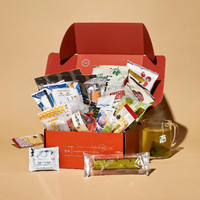
Rice crackers are the kotatsu's savory staple: crisp, salty and perfect alongside a cup of hot green tea. Soy sauce senbei, nori-wrapped crackers, small arare and chunky okaki all make regular appearances. The November First Snow on Fuji box's soy sauce Jari-Sen from Mochikichi in Fukuoka is exactly the kind of cracker that disappears by the handful at a kotatsu.
Ice Cream (Yes, in Winter)
One of the most delightful kotatsu habits is eating ice cream while sitting under one. With your legs toasty under the quilt, something cold suddenly tastes like a luxury, and many people in Japan consider kotatsu ice cream one of winter's small, slightly indulgent pleasures. Convenience stores and supermarkets keep their freezers well stocked in winter for exactly this reason.
Grilled Mochi
After New Year, many households have leftover mochi from their decorations and celebrations. Toasted until it puffs and chars, then brushed with soy sauce, wrapped in nori or dusted with kinako, it becomes a warm, chewy kotatsu snack. Some families even toast it right on a small grill or tabletop stove.
Tea and Sweets
A pot of green tea or hojicha almost always sits on the kotatsu, and with it come small sweets: manju, daifuku, castella, chocolate and cookies. Winter-only chocolates and rich butter cookies feel especially right here, a topic we cover in our guide to Japanese winter snacks.
Hot Pot for Dinner
On cold nights, the kotatsu often doubles as the dinner table. A portable gas burner goes in the center with a bubbling nabe (hot pot) on top, and everyone cooks and eats from the same pot without leaving their spot, the coziest possible way to share a meal.

How to Use a Kotatsu
Using a kotatsu is easy, but a few habits make it more comfortable. Sit on a cushion (zabuton) or a floor chair with your legs under the quilt, and tuck the quilt edges around you to keep the heat in. Most heaters have a low and high setting, and low is usually plenty once the space is warm. Keep a drink nearby, since the dry heat can be surprisingly dehydrating, and resist the temptation to sleep under it all night; a short nap is a kotatsu tradition, but a full night can leave you overheated and groggy.
Can You Use a Kotatsu Outside Japan?
Yes. Kotatsu tables are increasingly sold outside Japan, including models built for local power standards, and they work well in apartments where heating a whole room is expensive. Because Japanese electrical outlets run at 100 volts, a model bought directly from Japan may need a voltage converter, so check the specifications or buy one designed for your country. Even without a kotatsu, you can borrow its spirit: a low table, a heavy blanket over your lap, a bowl of mandarins and a plate of rice crackers get you most of the way there.

Frequently Asked Questions
What is a kotatsu?
A kotatsu is a low Japanese table with an electric heater attached underneath and a thick quilt draped between the frame and the tabletop. People sit on the floor with their legs under the quilt, where the trapped heat keeps them warm.
What do Japanese people eat at the kotatsu?
Classic kotatsu snacks include mikan oranges, senbei and other rice crackers, grilled mochi, small sweets with green tea, and, surprisingly, ice cream. On cold nights, families also cook nabe hot pot on a burner placed on the table.
Why do Japanese people eat mikan at the kotatsu?
Mikan are in season in winter, easy to peel by hand and juicy, so they can be eaten one after another without leaving the warmth of the kotatsu. A bowl of mikan on the kotatsu is one of Japan's most familiar winter images.
What is a hori-gotatsu?
A hori-gotatsu is a kotatsu set over a pit cut into the floor, so people can sit with their legs hanging down as if on a chair. It is common in traditional Japanese restaurants and inns.
Is it safe to sleep under a kotatsu?
A short nap is common, but sleeping under a kotatsu all night is generally discouraged because it can lead to overheating, dehydration and poor sleep. Use the low setting and keep a drink nearby.
When do Japanese families use the kotatsu?
Most households set up the kotatsu quilt in late autumn, often around November, and use it through the winter until spring, when the quilt is removed and the kotatsu returns to being an ordinary low table.
Discover Japan One Snack at a Time
The kotatsu is proof that comfort in Japan is often about closeness: everyone under one quilt, one bowl of mikan, one plate of rice crackers passed around the table. It is where Japanese winter snacking really happens, slowly, together and with warm feet. Every Bokksu box is made for that kind of sharing, with snacks and tea chosen to match the season in Japan and a Culture Guide that tells the story of each maker. If you would like to stock your own winter table, explore the Bokksu Snack Box subscription and bring a little kotatsu warmth home, one snack at a time.

-
Trending Posts

-


Author Bio
More from the blog
View all


